Best Retail Design Trends 2025 (Part 1)
TRANSPARENCY

Introduction to this publication series
As physical stores compete with online shopping, architecture has become retail’s most powerful differentiator. This series selects and groups flagship projects for luxury brands across the world—from Alaïa in Paris and Missoni in Milan to Acne Studios in Tokyo and Printemps in New York—to identify five distinct spatial strategies transforming contemporary commercial design. From transparent glass chambers to chromatic saturation to theatrical gestures, these typologies reveal the emerging architectural languages through which designers translate brand identity into unforgettable spatial experience.
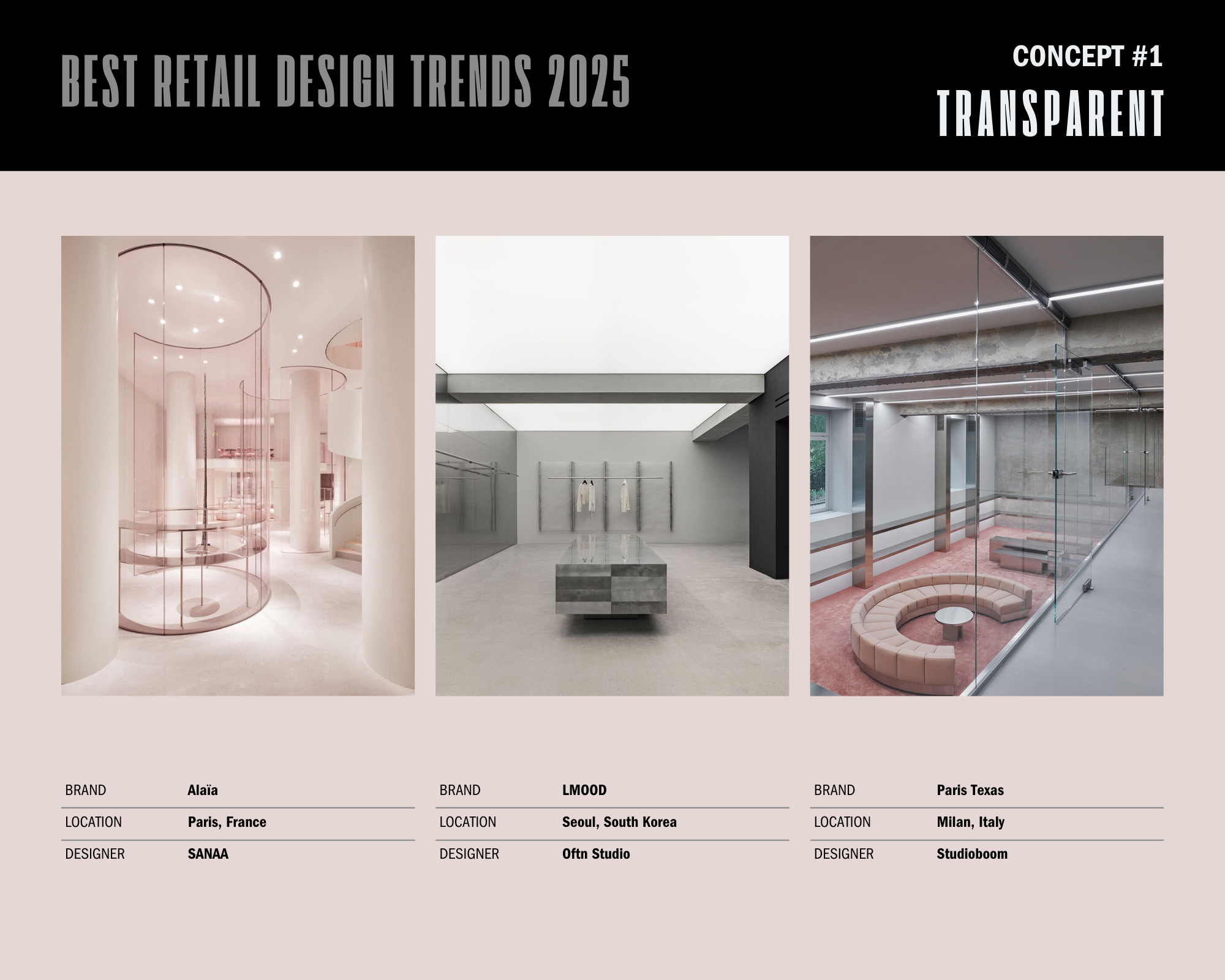
How Alaïa, LMOOD, and Paris Texas Transform Glass into the Ultimate Luxury Statement
In luxury retail, transparency has evolved beyond a mere design trend—it’s now an immersive spatial philosophy. Glass isn’t simply another material; it’s the essential medium for crafting experiences that are at once intimate and untouchable, accessible but distinctly exclusive. By layering sightlines and dissolving conventional boundaries, designers using transparency redefine the very nature of desire for luxury objects, which remain both tantalizingly close and just out of reach. These stores transcend traditional product display, elevating merchandise through a dynamic visual performance of light and reflection.
Weightless Luxury
Step into any of these flagship spaces and the first sensation is not of walls or floors, but of light itself. Transparency is at the heart of the design language: glass structures define rooms, acrylic partitions shape space without obstructing views, and reflective surfaces multiply visual impressions. Openness is prioritized over solid separation, immersion over isolation. Navigating these interiors means moving through layered transparencies and intersecting partitions, constantly encountering shifting perspectives. The customer journey is elevated into a curated store experience, where every turn unveils new dimensions and views.
This signals a pivotal transformation in luxury retail architecture. Rather than relying on dense, monumental forms that evoke permanence and mass, these interiors favor ethereality and transience. Light, refraction, and transparent enclosures become the principal materials, shaping spaces that feel like hourglasses—where time bends and desire is staged and sustained.
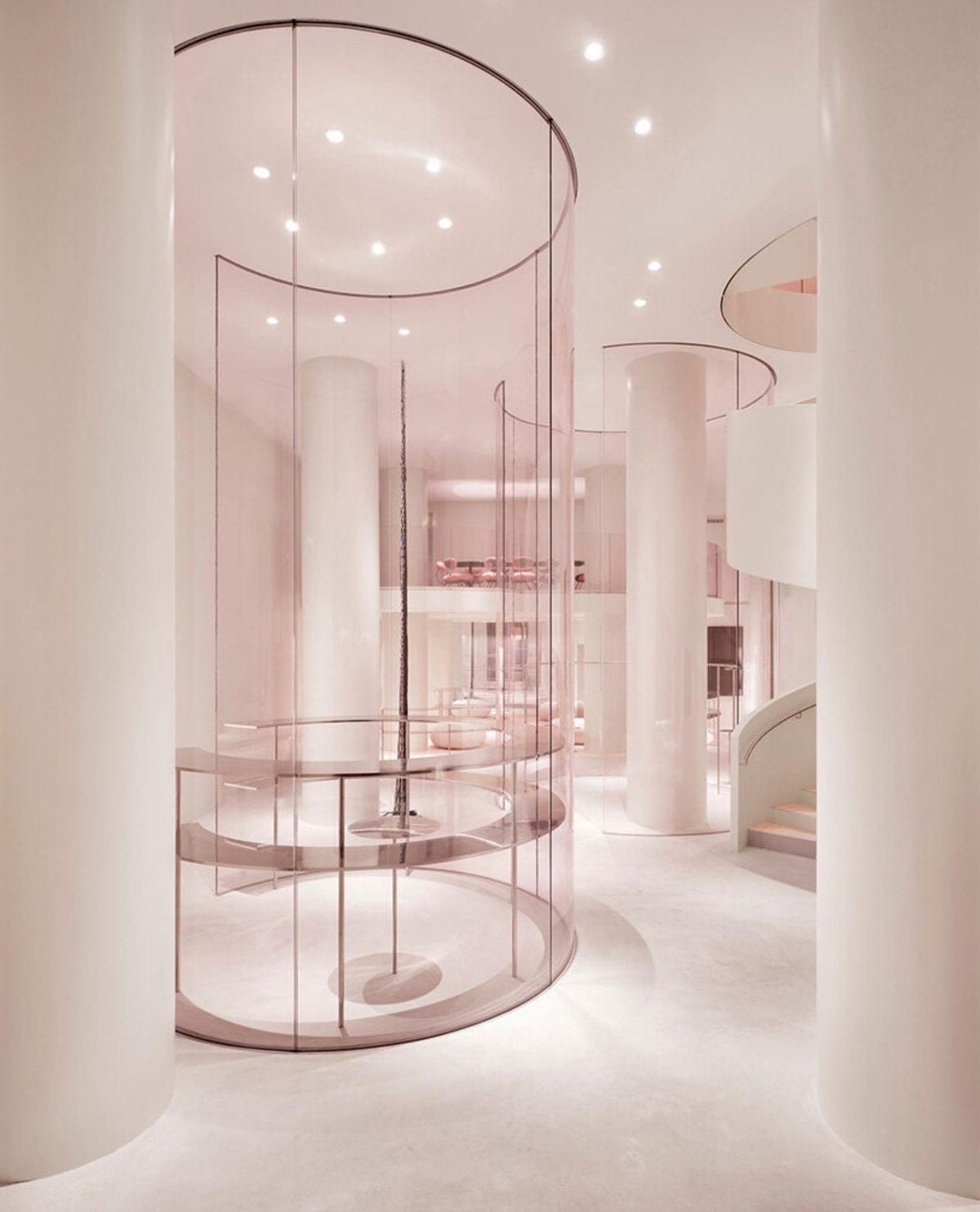
At Alaïa’s flagship in Paris’s historic shopping district, studio SANAA and creative director Pieter Mulier reimagine the brand’s “second skin” philosophy in spatial terms. Four transparent cylindrical volumes anchor the ground floor—glass chambers suffused with soft pink light, each dedicated to a collection. These vessels transcend mere display cases; they are inhabited rooms where the boundary between viewing and accessing is blurred.
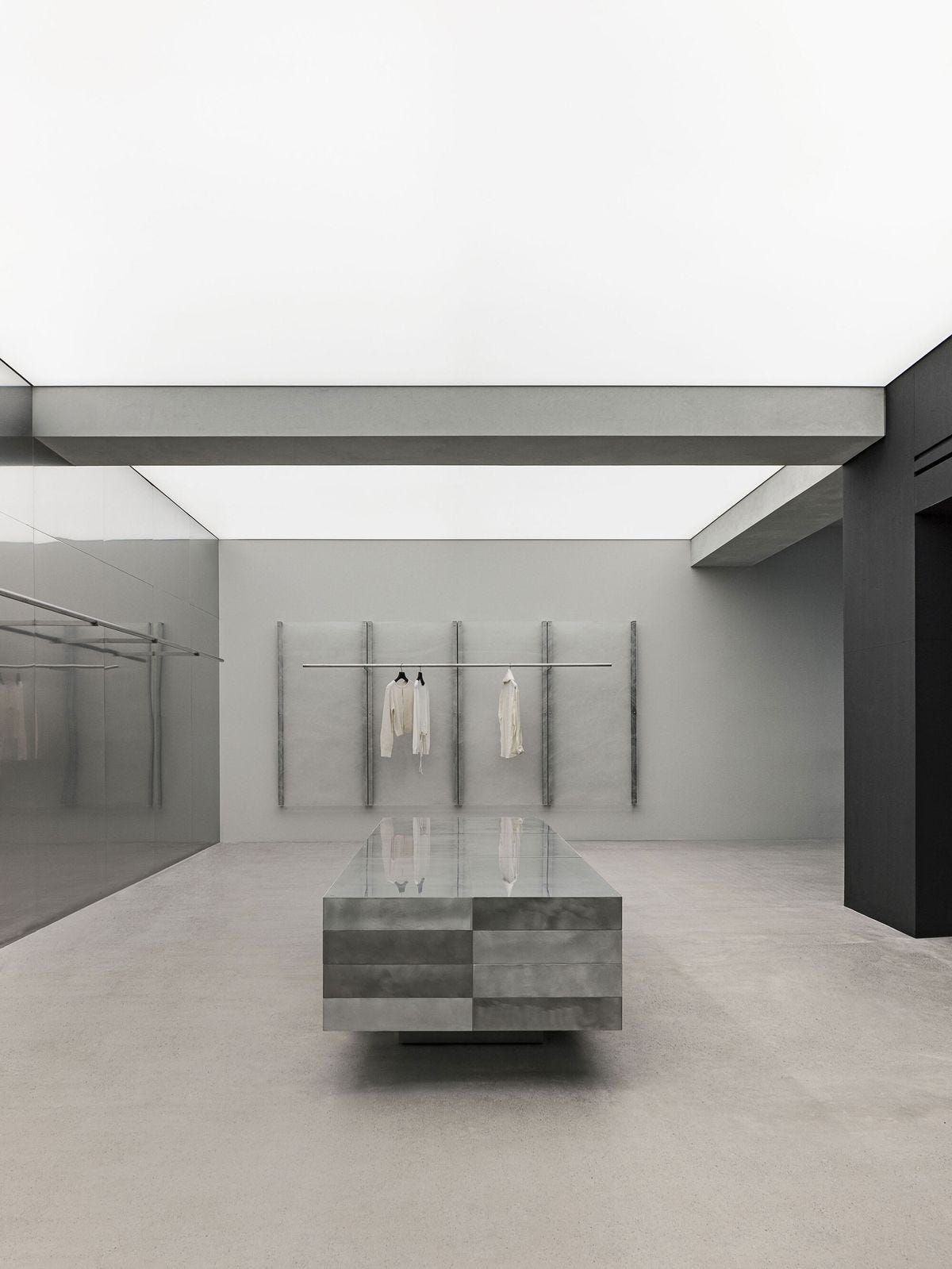
At the LMOOD flagship in Seoul, WGNB’s design centers on a meticulously crafted acrylic wall, which functions simultaneously as partition, screen, and glowing surface. This translucent element divides the two-floor interior yet preserves visual connectivity, embodying what the architects call “Moodmass”—a tangible expression of serenity and balance achieved through near-immaterial means. For a clothing brand that values quiet intensity and refined simplicity, transparency stands as the purest minimalist gesture: it delivers maximum spatial presence with minimal volume.
Intimacy Through Distance
The transparent design strategy produces a compelling paradox: retail environments feel intimate because they maintain separation. Glass encases coveted items, keeping them within sight but just out of reach—it mediates desire while carefully protecting the displayed collections. The effect is a delicate equilibrium. Spaces that are too open lose their mystique; those that are too closed become intimidating. Transparency resolves this tension by granting complete visual access while safeguarding physical boundaries. Acrylic panels diffuse light with a muted sheen, offering gentle reflection rather than sharp, mirror-like clarity.
Studioboom’s Milan showroom for the brand Paris Texas reconfigures a double-height interior into a “hangar,” stripped to its essentials and rebuilt with steel, stone, glass, and concrete. For a shoe brand renowned for bold design and architectural silhouettes, the glass enclosure is multifunctional: it becomes a stage for meetings and presentations, underscores the brand’s business gravitas, and sustains visual connectivity throughout the showroom.
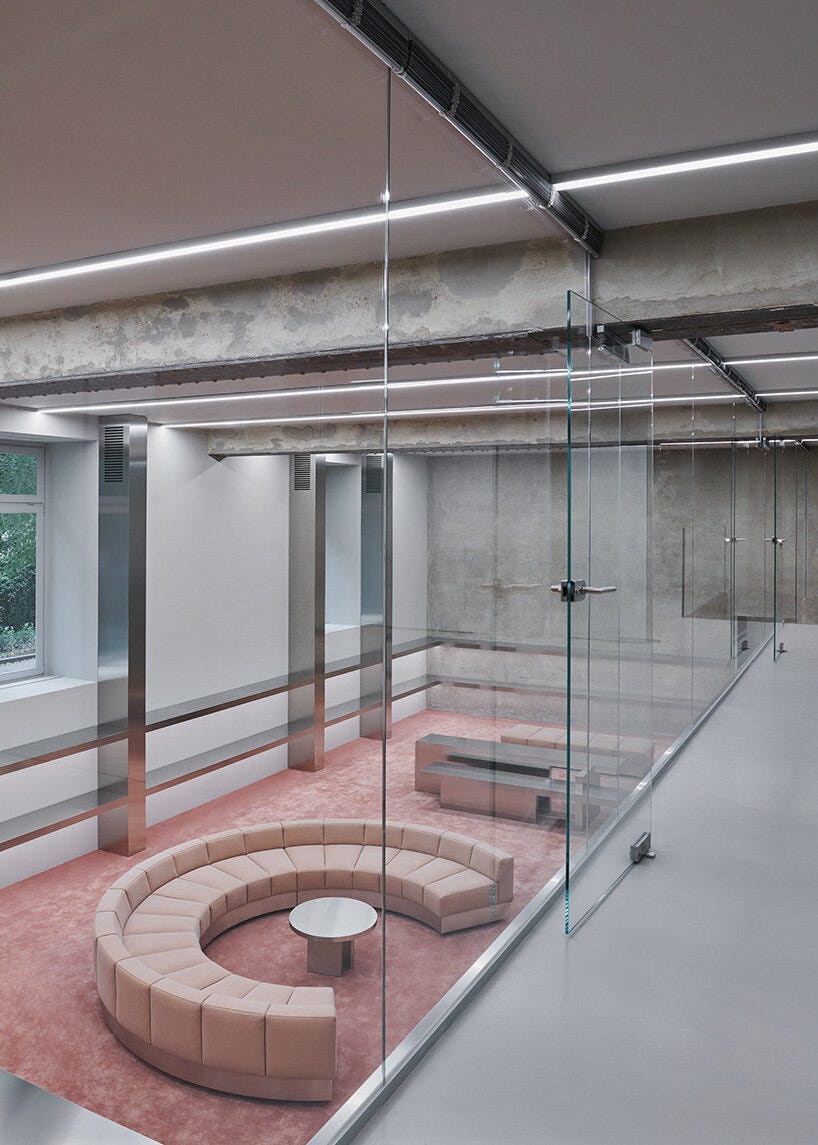
Despite the openness, these spaces resist coming across as cold or sterile. Their paradoxical nature is palpable: they are simultaneously open and enveloping, transparent yet atmospherically rich. Removed from the rhythms of everyday retail, the customer enters a perpetual present—a suspended moment where shopping transcends transaction, and guests are enfolded in a waking dream.
Accessible Exclusivity
When architects employ glass, they aren’t merely crafting open, egalitarian spaces—they’re masterfully curating the vantage points that frame perception and define every view. Glass directs attention, stages products like masterpieces, and controls the order of revelations. What seems like openness is, in fact, a carefully orchestrated unveiling.
Such transparency is especially potent for luxury brands adapting to contemporary expectations. Today’s consumers, particularly younger generations, demand a higher level of accessibility—they reject outdated models of luxury shrouded in mystery and exclusion. Yet, luxury’s allure still hinges on scarcity and the sense that these offerings are not universally attainable.
Transparency offers a solution to this tension. The space is open and welcoming but maintains physical barriers. You may look, but to touch you must cross a pre-defined threshold. You can observe the world behind the glass, but true participation requires entering spaces that, albeit transparent, remain distinctly separate. At Alaïa’s flagship store, transparency mirrors the brand’s ethos of intimacy and bodily connection—everything is visible yet protected, open yet precisely curated, just like the garments themselves.
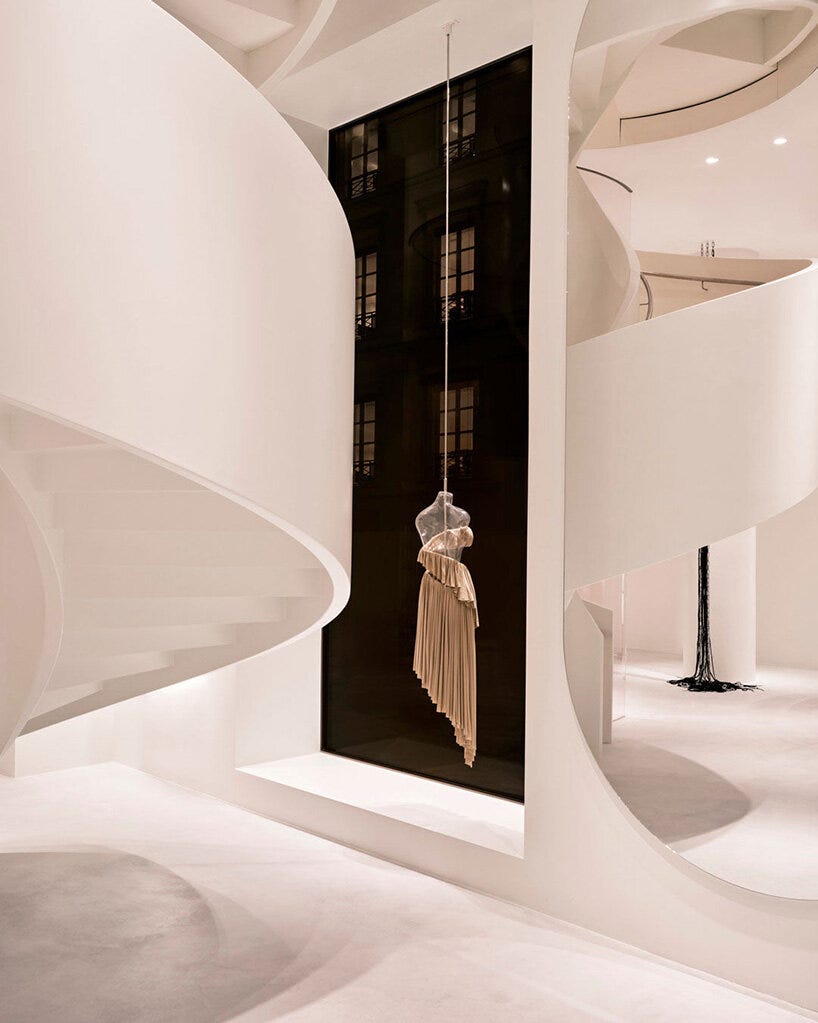
Similarly, industrial transparency at Paris Texas signals design confidence—everything is on display, nothing concealed, yet always under intentional control. The glass barrier allows the inventory to be appreciated as a curated still life, amplifying desire through the fertile tension between visibility and restricted access.
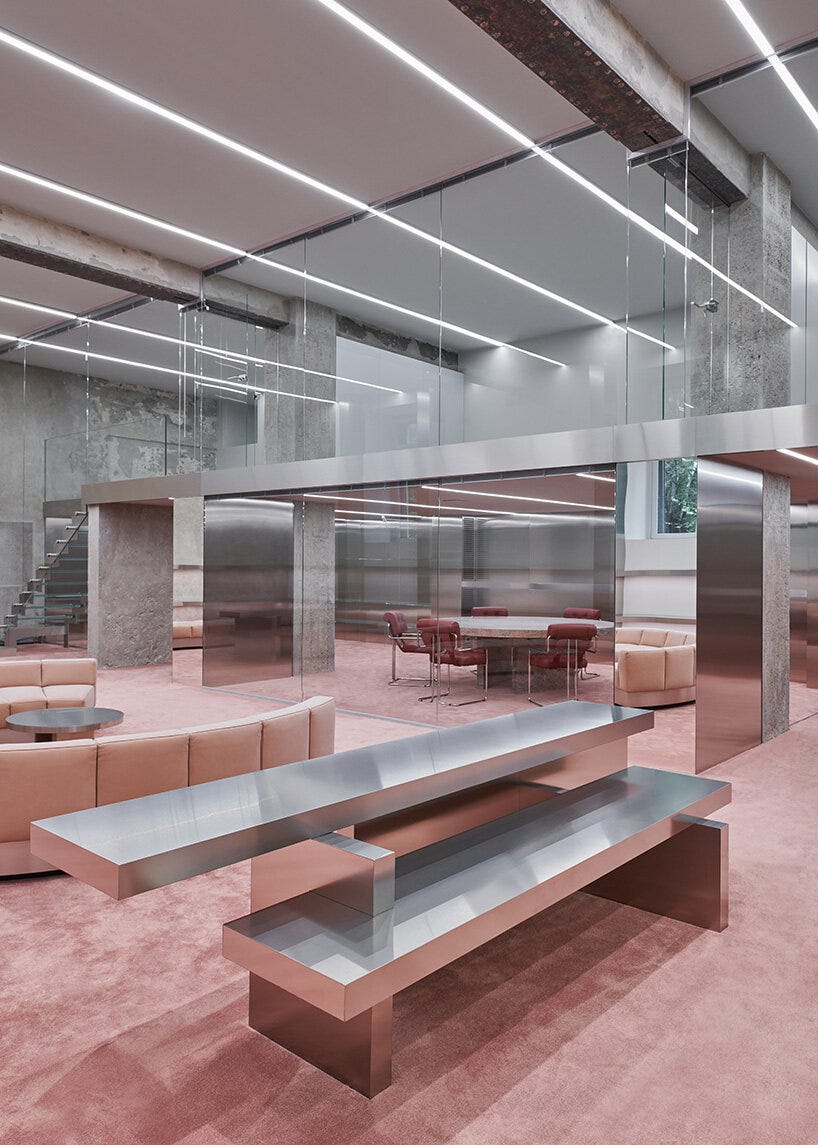
This is the new paradigm of luxury: no longer hidden behind opaque barriers but showcased within transparent membranes that preserve just enough distance to maintain allure while perceived as completely open. It’s the embodiment of accessible exclusivity—a spatial strategy attuned to modern demands for openness yet anchored in the timeless mechanism of luxury: the tantalizing interplay between desire and possession.
Disclaimer: While the projects featured here have been documented elsewhere, this analysis focuses on typological extraction and trend identification rather than project description. Image rights belong to their respective copyright holders; sources are acknowledged throughout.
.